Wednesday, September 19, 2012
Monday, September 17, 2012
coconara
coconara is a micro-service platform for mostly non-physical goods.
It is a mix of Quora (for having someone to answer a particular question) and
Amazon (for actually selling the product online).
What I think interesting and attractive about coconara are two things; contents and pricing.
coconara contents are bizarrely unique and attractive.
For example, I have requested some professional advice for this blog to become
better and more interactive media. The advisories are all professional and although
they can only give their advice with certain limitations (due to price mostly),
it is truly amazing experience to have someone to take a look at such things.
Other stuff I instantly purchased was romance advice from experienced lovers,
and even more substantial stuff such as logo for my friend's rock band.
Other offerings include "revise your resume", "advice for MBA essay questions",
"diet" and etc. I realized that at the end of the day,
all these trivial things that make me very happy.
To add, ,most of sellers in coconara are individuals.
So you directly feel as if you are connected to the person by buying their product.
Another critical coconara factor is its pricing.
At coconara, every service is only for 500 yen (roughly 5-6 US dollars).
This is such a huge advantage of coconara, and I hope they will continue the price or
even challenge lowering the price.
In web or in any other scale-able businesses , the product must be "insanely" cheap.
I don't know about average prices of online consumer retails, but 500 yen pricing so far
does seem to work.
I hope coconara will grow further with better quality controls, rich service lines, and so on.
Friday, August 24, 2012
Timor Lorosae
I had a chance to watch a documentary film about East Timor.
East Timor...
Yes, a small island neighboring Indonesia!
The film was focusing on music.
The director, who was a young Japanese female, took attention to the lyrics of
songs that locals sang.
Sad ones. They were singing about the bloody battle toward independence
which prolonged for more that quarter a century.
Brutal Indonesian military led by Soeharto killed, raped, thousands of innocent citizens
along with light-armed force of East Timor.
Other countries and international organization kept their eyes closed.
Japan, by then and even now as one of leading economical and political power in the region,
financially aided Indonesian government and was one of the only developed nations
which opposed the independence of East Timor.
With the independence announced in 2002, Japan started supporting East Timor,
as if nothing happened.
As I am not an expert in this topic, I cannot say anything but my opinion.
However, I feel something about this as a Japanese.
Should my government reinforce the policy without philosophy?
Because from my view, I cannot see the consistency and clarity.
Thus, I am deeply felt touched by this fact.
With all of these things, what is left for me to support them further develop?
Is it safe to assume that these people want same things as ours?
Questions remain unanswered.
But one thing I can say is that they will need a better security of life.
Waters, sanitation, electricity...basic stuffs.
So I will try to develop a product that will secure their basic lives by today's global standard.
Should my government reinforce the policy without philosophy?
Because from my view, I cannot see the consistency and clarity.
Thus, I am deeply felt touched by this fact.
With all of these things, what is left for me to support them further develop?
Is it safe to assume that these people want same things as ours?
Questions remain unanswered.
But one thing I can say is that they will need a better security of life.
Waters, sanitation, electricity...basic stuffs.
So I will try to develop a product that will secure their basic lives by today's global standard.
Monday, August 13, 2012
Design Thinking for Social Innovation
---
Introduction: Finding myself saving the world.
Some say about 4 billions are living under poverty.
They live for less than 2 dollar a day.
They dont have money, and they dont have goods.
They dont have access to water, and have no electricity.
My primal interest for so-called BOP (Base of Pyramid) was its growing, enoromous market size.
My work, an HDD supplier, worships the size of economy for two reasons.
The first reason is scalability.
In the world of computing, the scale is everything.
You cannot develop a marketing strategy only for specific type of people.
Instead, your plan would likely to go for the large market.
The second reason is "Winner-takes-all" rule.
You can either become the first or second biggest supplier, otherwise
you will go away sooner or later.
So, my interest for BOP domain derived from soley business, not humanitarian.
Whatever the motivation is from, here I am, thinking about creating a product for
people in developping countries.
------------
My journal describes the feeling as followed;
Lately I have been on many things.
My first priority is, and has been so mqny years now, work.
IT is, like a big monster, and never seems to have an ending.
It is a very competitive job, at times, and usually very frustrating .
But that is just business as usual.
What is new?
I am participating See-D contest, which is a business and product design competition targeting developping countries.
I am excited about the opportunity, as I formed up a team with very diverse individuals.
I feel the good vibes. Yet at the same time, I come to find paradoxes.
That I am volunteering to help somebody whom I do not know well.
- I have not visit the place he or she lives. This worries me as I may be helping them in wrong way.
- I do not speak their mother tongue. This makes me feel insecure that I cannot communicate interactively.
--------------
( to be continued)
Introduction: Finding myself saving the world.
Some say about 4 billions are living under poverty.
They live for less than 2 dollar a day.
They dont have money, and they dont have goods.
They dont have access to water, and have no electricity.
My primal interest for so-called BOP (Base of Pyramid) was its growing, enoromous market size.
My work, an HDD supplier, worships the size of economy for two reasons.
The first reason is scalability.
In the world of computing, the scale is everything.
You cannot develop a marketing strategy only for specific type of people.
Instead, your plan would likely to go for the large market.
The second reason is "Winner-takes-all" rule.
You can either become the first or second biggest supplier, otherwise
you will go away sooner or later.
So, my interest for BOP domain derived from soley business, not humanitarian.
Whatever the motivation is from, here I am, thinking about creating a product for
people in developping countries.
------------
My journal describes the feeling as followed;
Lately I have been on many things.
My first priority is, and has been so mqny years now, work.
IT is, like a big monster, and never seems to have an ending.
It is a very competitive job, at times, and usually very frustrating .
But that is just business as usual.
What is new?
I am participating See-D contest, which is a business and product design competition targeting developping countries.
I am excited about the opportunity, as I formed up a team with very diverse individuals.
I feel the good vibes. Yet at the same time, I come to find paradoxes.
That I am volunteering to help somebody whom I do not know well.
- I have not visit the place he or she lives. This worries me as I may be helping them in wrong way.
- I do not speak their mother tongue. This makes me feel insecure that I cannot communicate interactively.
--------------
( to be continued)
Sunday, July 22, 2012
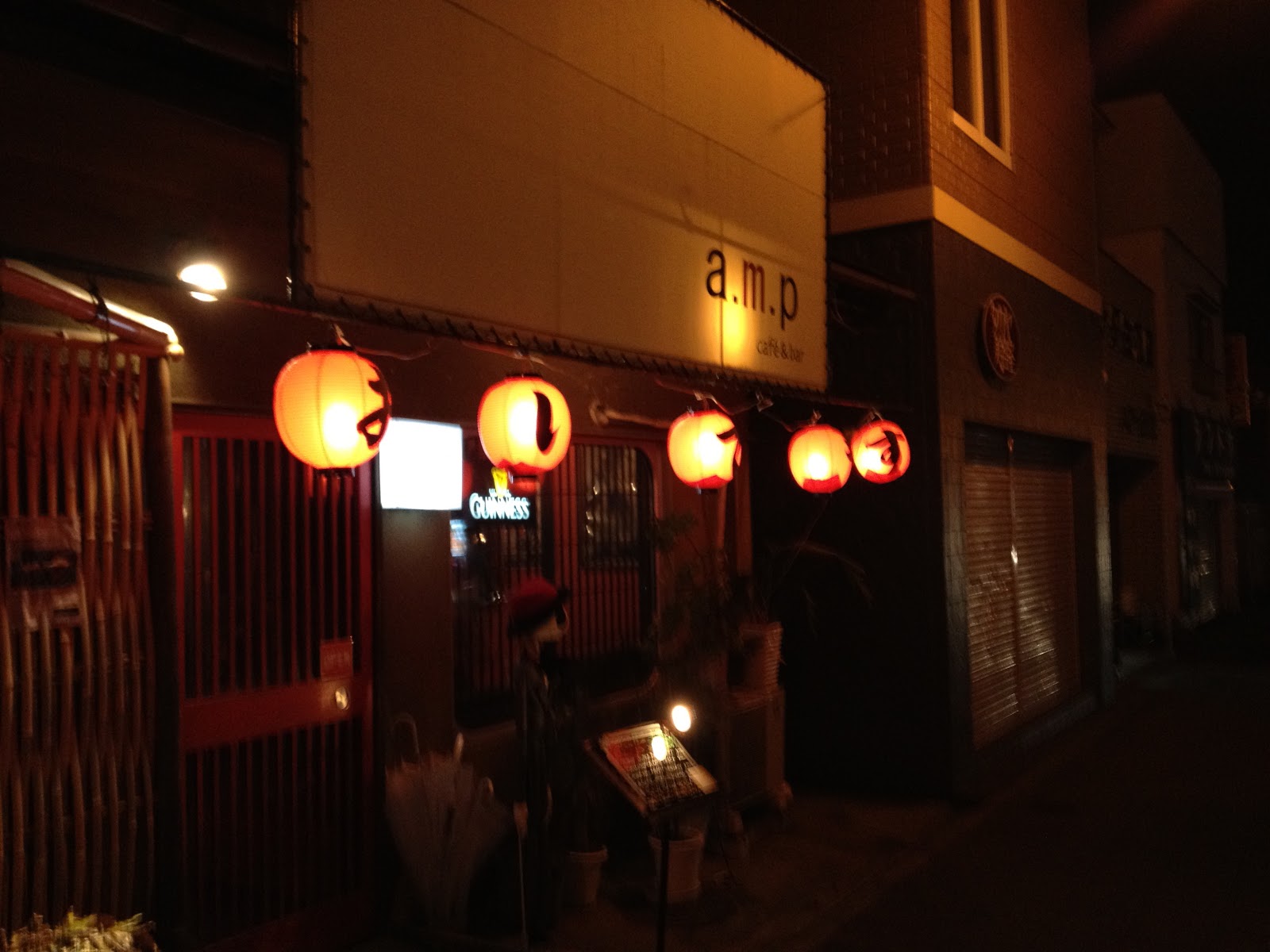
a.m.p summer bash
People seek rock music for lots of reasons; relaxation, soul-searching, or fraternity.
On 8th of August, a show which will be held in my neighborhood might offer something of above
in this hot, timid & crowded summer.
To me, music is a dialogue.
Listening to others always results getting back to my inner self.
You may cry, or you may laugh, but you may never escape of
what the voice inside your mind tells you.
Taking it too seriously?
Come and find out!
.JPG)
Monday, July 9, 2012
In the beginning was the Word
"Each one of us stands with great potential.
If there was something on our way,
it must be our laziness, or
lack of creativity, courage and effort.
We should live up our own lives,
and fully embrace the 'edge',
that is unique to individual."
- Daisuke Iwase
"Apollo reached to the moon because it meant to be.
It didn't get there by improving airplanes."
- Hiroshi Mikitani
" I am not a genius.
Because,
I can explain how I hit it and get on the base."
- Ichiro Suzuki
"May 'Hard' be 'Easy'.
'Easy' be 'Deep'.
'Deep' be 'Funny'.
'Funny' be 'Serious'.
'Serious' be 'Humorous'.
And 'Humorous' be extremely humorous."
- Hisashi Inoue
Saturday, June 30, 2012
Business Model Generation
Business Model Generation is a book focused on how to generate innovative and robust business models. If you have an entrepreneurial spirit, or if you want to become a change agent, this book can help you how to architect
the business structure. The question here is,this;
The book aims to give you insights for how to create the business and build strategy.
Business model is about value proposition.
It is about how your organization can create a value to customer and deliver it.
This book decomposes a business model to 4 domains
(customer, value proposition, infrastructure, finance).
For 4 domains, there are 9 building blocks.
9 building blocks are;
CS (Customer Segments)
=> Customer segments are groups of people of which your
organization trying to interact. So to question, for whom
shall we create a value? and identify who is "the most"
important customer. Below are examples of CS.
a). Mass market
b). Niche market
c). Focused market
d). Diversified market
e). Multi-side platform (e.g. credit card/retail store)
VP(Value Proposition)
=> What value does your organization propose to customer?
What particular does it solve?
What needs does it satisfy?
To which CS and what product/service does it deliver?
...VP is to answer above questions in order to make the
organization "valuable". Following three attributes can
greatly contribute the successful VP.
- Newness of product/service (e.g. Ethical Funds)
- Performance (HDD)
- Customization (
CH(Channels)
=> Channel is a path defining how it communicates and
delivers the service to customer. Consecutively,
how you can integrate the channels.
CR(Customer Relationships)
=> You can classify the CR as followed;
- Personal Assistance
- Self-Service
- Automation (e.g. Genius)
- Community (e.g. GlaxonSmithKline)
- Collaboration (e.g. Amazon book review)
R$(Revenue Streams)
=> How can your organization generate revenue?
Or conversely, how does customer wants to
consume the product/service?
- Sales of Product/Service (e.g. FIAT)
- Fee (e.g. Hotel)
- Subscription (e.g. News paper)
- Rental/Lease (e.g. Car rental)
- License (e.g. Intellectual Property)
- Agent Charge (e.g. Brokerage Allowance)
- Advertisement
KR(Key Resources)
=> For value proposition, what resources are needed?
- Physical Resource (e.g. factory, machine, system etc)
- Intellectual Property (e.g. brand, IP, partnerships etc)
- HR
- Financial Resource
KA(Key Activities)
=> What are the key activities in order to propose value/
- Manufacturing
- Problem Solving
- Platform/Network
KP(Key Partners)
=> Who are the key partners? Who are the key suppliers?
Which resource are you getting from which partner?
Which key activities are your KPs engaging?
- Optimization and Economy of Scale
- Mitigate Risk and Uncertainty
- Acquire resources and activities
C$(Cost Structure)
=> What is the most remarkable "cost" in business model?
Which resource is the most expensive?
Which key activity is the most expensive?
Once you find out, then you can map them out on canvas.
Good luck!

the business structure. The question here is,this;
"How the business model in your organization can cope with
fast-changing and competitive situation"
The book aims to give you insights for how to create the business and build strategy.
Business model is about value proposition.
It is about how your organization can create a value to customer and deliver it.
This book decomposes a business model to 4 domains
(customer, value proposition, infrastructure, finance).
For 4 domains, there are 9 building blocks.
9 building blocks are;
CS (Customer Segments)
=> Customer segments are groups of people of which your
organization trying to interact. So to question, for whom
shall we create a value? and identify who is "the most"
important customer. Below are examples of CS.
a). Mass market
b). Niche market
c). Focused market
d). Diversified market
e). Multi-side platform (e.g. credit card/retail store)
VP(Value Proposition)
=> What value does your organization propose to customer?
What particular does it solve?
What needs does it satisfy?
To which CS and what product/service does it deliver?
...VP is to answer above questions in order to make the
organization "valuable". Following three attributes can
greatly contribute the successful VP.
- Newness of product/service (e.g. Ethical Funds)
- Performance (HDD)
- Customization (
CH(Channels)
=> Channel is a path defining how it communicates and
delivers the service to customer. Consecutively,
how you can integrate the channels.
CR(Customer Relationships)
=> You can classify the CR as followed;
- Personal Assistance
- Self-Service
- Automation (e.g. Genius)
- Community (e.g. GlaxonSmithKline)
- Collaboration (e.g. Amazon book review)
R$(Revenue Streams)
=> How can your organization generate revenue?
Or conversely, how does customer wants to
consume the product/service?
- Sales of Product/Service (e.g. FIAT)
- Fee (e.g. Hotel)
- Subscription (e.g. News paper)
- Rental/Lease (e.g. Car rental)
- License (e.g. Intellectual Property)
- Agent Charge (e.g. Brokerage Allowance)
- Advertisement
KR(Key Resources)
=> For value proposition, what resources are needed?
- Physical Resource (e.g. factory, machine, system etc)
- Intellectual Property (e.g. brand, IP, partnerships etc)
- HR
- Financial Resource
KA(Key Activities)
=> What are the key activities in order to propose value/
- Manufacturing
- Problem Solving
- Platform/Network
KP(Key Partners)
=> Who are the key partners? Who are the key suppliers?
Which resource are you getting from which partner?
Which key activities are your KPs engaging?
- Optimization and Economy of Scale
- Mitigate Risk and Uncertainty
- Acquire resources and activities
C$(Cost Structure)
=> What is the most remarkable "cost" in business model?
Which resource is the most expensive?
Which key activity is the most expensive?
Once you find out, then you can map them out on canvas.
Good luck!

Tuesday, June 5, 2012
Seven Tips for Effective Self-Branding
This is a takeaway from @sakanoue san.
I just found it very useful
so I thought it might be a good idea to share this.
Many of us, I suppose, want to look "good" in public and private.
No one wants a bad circumstance and "self-branding" is a way to
lead a better life.
However, not all of us
have much time to go through hundred pages of
Kotler's marketing management.
So, here are seven tips and hope it helps!
However, not all of us
have much time to go through hundred pages of
Kotler's marketing management.
So, here are seven tips and hope it helps!
Tip 1.
See yourself with Bird-Eye.
-You need to see yourself with bird-eye.
You need to recognize yourself objectively.
You need to recognize yourself objectively.
Observe. Analyze. and
Realize what you are trying to do.
- It is very important that you know which mountain to climb
before you start. But, many of us are so unfortunate for not-knowing what it exactly is that we want.
Don't try to be perfect from the first time.
Don't try to be perfect from the first time.
-Although you think you know what you like,seek for the deepest source of your passion.
If you like video game, analyze what kind of video game you like, and what particularly your like about the types of video games you like. It gets more authentic as you go deeper.
Tip 2.
Make sure you know who you are and why you are here.
-It is not about GPS. It is not about the job title or any kind of things that your write in a piece of paper (even though you need to put it down on a paper for resume).
- Knowing who you are and why you are here is such an important thing. I stated that it is not about the job title or geographical location as such, but remember they are all attributes of who you are to describe where you are at, and perhaps where you are going.
Tip 3.
Say it aloud. Who you are. To the most important people.
- The science has not revealed that communication without words. Also, people (especially the ones are most important) do not pay attention to you (or they do, but not as much you want them to be). So, say it. Say it so you can make it happen.
Tip 4.
When is your last time you thought,
"I lost track of time doing..."
"I lost track of time doing..."
- Doing what makes you crush?
Tip 5.
Friends are the mirror. Many mirrors will help.
- Friends are like mirror to yourself.
Your friends are likely to be similar to you.
So be conscious about your friends, because they reflect you.
Also be active to meet new people. Don't settle.
Tip 6.
Stay Positive.
- You can only do it when you think you can.
(In other words, you will never make it as long as you don't think you can).
Tip 7.
Stay True.
- True brand resides in true self. So don't lie. Stay True.
Brand is something you can recognize within seconds.
Brand is something you can clearly identify among others.
Meet your potential by effective self-branding.
Sunday, May 20, 2012
Work-Life Balance in Japan
Working in Japan is often referred as mere a attraction, besides its economical stability.
Overall, I would like to summarize that
work-life balance in Japan is not solely bad; it is stable and there are options.
However, it is extremely hard for young generation to find a space where
he/she can fully explore the potential to become a leader.
The risk of becoming a leader in Japan will be described in upcoming entry.
Cheers!

People work longer hours than any other countries on this planet, and
they work for incredibly detailed "quality" (let us call it).
Although it depends on industries and firms of which you work for,
people work generally 10-12 hours or more. It tends to evaluate the someone's work
by the length of hours worked instead of the content itself.
Cultural background (of self-sacrifice) has something to do with it, maybe.
However, when you look at the data, Japan is not so much of "the hard-working" country.
This article explains how intense the work situation is in South-Korea.
And it seems to have very similar characteristics of "old" Japanese work-environment.
I used to think, that Japan's work environment is bad. Yet given the statistics,
it may not be true. Of course, it does not make it easy by any means.
it may not be true. Of course, it does not make it easy by any means.
I have seen so many westerners who work harder than Japanese.
As Sheryl Sandberg's article suggested (she leaves the office at 5:30),
it is not easy for people to walk out of office early anywhere anyhow
(you have to make up for it, if you want to stay or go up).
One thing that I can ask for Japan's work environment is that to open up doors to young workers.
In Japan, where society is well-structured and seniority is the main factor to determine the position in any organization,
it is very rare to get a responsible position (e.g. manager, director etc) in 20's or even 30's.
In a traditional organization, most of C-level slots are filled with50 to 60 year old veterans. And those traditional firms are often the first runner in the industry.
Perhaps this is a good way of managing a matured organization, but leaves a very little space for younger generations.
Overall, I would like to summarize that
work-life balance in Japan is not solely bad; it is stable and there are options.
However, it is extremely hard for young generation to find a space where
he/she can fully explore the potential to become a leader.
The risk of becoming a leader in Japan will be described in upcoming entry.
Cheers!

Sunday, May 13, 2012
Various Definitions on Happiness
I know there is a discussion of "work-life balance" as such.
And I know there is a variety of definitions of happiness.
I just thought that, I'd be happier if I work for things that I am passionate about.
Because at the end of day, I ask myself "why I am here?", and
I cannot exclude "work" from my reason(s) of existence.
Work is something I spend a great amount of time for, and I will, until
the day I retire.
So, here's a question.
Why I'm here?
Maybe I could have spent another life, but why this and how come?
I think, everything happens for reasons,
and the reasons sometime come after the incidents,
so that crazy person like I will learn a lesson. Perhaps.

Thursday, May 10, 2012
Don't save your sex till you're old
Warren Buffet once said
Don't save you sex till you're old.I love what I do, and I go to work tap-dancing each morning.
I cannot agree more.
I cannot allow myself doing anything else that my heart is not in it.
There's work and there's your life's work. The kind of work that has your fingerprints all over it. The kind of work that you'd never compromise on. That you'd sacrifice a weekend for.
What is your goal?
What is your biggest fear?
What is gonna prevent you from accomplishing the goal?
What is gonna prevent you from accomplishing the goal?
I'd like to be myself as follows;
Nothing. That's I get I every morning, that's all I do.
I know it may sound childish, but I wanna have "passion" on what I am doing.
Sunday, May 6, 2012
Booze
When you grab a hold of me,
you'd tell me the night will never end...

Booze, such a nocturnal attraction.
Once I step into the night, I easily fall a victim.
Could you make it strong so I don't need to think.

Saturday, May 5, 2012
Anthropologist inside Intel
Genevieve Bell is an inspiring woman.
I have found her speech in Stanford iTunes U.
She is a director at Intel for their Interaction and Experience Research.
"My job is two things. One of them is to reinvent computing. The second one is more of a challenge since there has been a range of technology that has been coming out in the past five years, whether it's televisions, phones, signage and even our PCs getting smarter and smarter. So, this other part of the job is how to we ensure that we make technology that people will love."
In 2010, she was named as one of the top 25 women in technology.
Born in Australia, she earned PhD at Stanford specialized anthropology.
" it felt like this enormous risk but it was an incredibly stupid thing for me to walk away from a tenure-track position at a well-known university in an area I was good at "
"This is not a big risk in the grand scheme of things. You're not going to end up dead or arrested. You're not going to lose your livelihood. And if you don't take risks like this, then what's the point?"
So how does an anthropologist find a place in techie firm like Intel?
"Initially, Intel was like a field site. It was so profoundly foreign. That let me ask naive questions and it created a headspace I could work in. They also knew anthropology was interesting and believed you could apply it to anything. It was liberating. I was able do research that I could not have done had I stayed in a university."
It reminded of me, going to tech industry from Philosophy major about 5 years ago.
But obviously, I am not as good as her :(
Anyway, I was persuaded that the diversity is really the key of successful enterprise.
Friday, May 4, 2012
Leadership is a choice
Leadership is a choice.
It starts from you.
Are you a leader? Do you want to be a leader?
If yes, read on.
If no, maybe, maybe, you can watch Shackleton the movie and be inspired...
When leading a organization, you have to have passion and social sensitivity of organization.
Also, you need to adjust the tactics depending on 5W1H.
You need to outperform in the organization, to be a leader.
That means you have to be competent.
But you need to be "like"d by the people in organization.
Leadership is a pursuit.
It takes time.
So, if you want to be a leader, take a good look at the people and you.
"A veces en las tardes una cara
Nos mira desde el fondo de un espejo;
El arte debe ser como ese espejo
Que nos revela nuestra propia cara."
- Jorge Luis Borges
(English: just like gazing upon a mirror that is reflecting your face, you should look at art as reflecting your face)

It starts from you.
Are you a leader? Do you want to be a leader?
If yes, read on.
If no, maybe, maybe, you can watch Shackleton the movie and be inspired...
When leading a organization, you have to have passion and social sensitivity of organization.
Also, you need to adjust the tactics depending on 5W1H.
You need to outperform in the organization, to be a leader.
That means you have to be competent.
But you need to be "like"d by the people in organization.
So, you need to satisfy both; lovable, and competent.
I also add that these features can be "chosen" by you.
You can choose to be a competent at certain point and be likable too.
Finally, the most important part of leadership is social sensitivity.
Leadership is not about "you", but "them".
If you want to be a leader, find out how the people live, eat, cook, sleep, laugh, and work.
Learn from them and lead wherever they wish to go.
It takes time.
So, if you want to be a leader, take a good look at the people and you.
"A veces en las tardes una cara
Nos mira desde el fondo de un espejo;
El arte debe ser como ese espejo
Que nos revela nuestra propia cara."
- Jorge Luis Borges
(English: just like gazing upon a mirror that is reflecting your face, you should look at art as reflecting your face)

Sunday, April 29, 2012
Needfinding and Frameworks

All my life, I have been trying to "Create" something.
Whether it is soccer-game (I'd call it "game-make"), a piece of music composition,
or web-site, I always have thought that their process can be similar to certain extent.
Then, I found "Design Thinking".
To put it simply, design thinking is a study of "creation" process.
I want to deploy design thinking to many situations both professional and private.
Because I believe it will make my life better a little bit.

Maybe it looks chaotic.

I believe that giving the order to chaos has meaning.

Saturday, April 28, 2012
The Intelligent Entrepeneur
I just finished reading the book "The Intelligent Entrepreneur".
An insightful, and very practical in some way to know what you will have
to go through once you decided to start up a company.

Marc Cenedella, one of three "intelligent entrepreneurs" who are described in
this book, graduated Harvard Business School with a Baker Scholar, which is given to
top 5% of 900 students in the graduate program.
Marc started his own business before he came to Harvard.
He already had started a successful trading company and moved it into black.
He already had started a successful trading company and moved it into black.
But one night, he thought to himself,
that he won't be satisfied by doing that business for the rest of his career.
He chose to go to HBS and started up TheLadders.com after the graduation.
that he won't be satisfied by doing that business for the rest of his career.
He chose to go to HBS and started up TheLadders.com after the graduation.

Entrepreneurship is often defined as following;
"the relentless pursuit of opportunity without regard to resources currently controlled".
So start-up folks dream big.
But the thing is, it is how the idea gets executed.
This book's narrative described in detail how 3 of HBS graduates including Marc,
But the thing is, it is how the idea gets executed.
This book's narrative described in detail how 3 of HBS graduates including Marc,
struggled and succeeded making a company and creating an impact.
Saturday, April 14, 2012
Vision and Mission of Watergate
Watergate is a creativity playground.
That is a platform.
That is an Operating System
So what are the applications, and infrastructure of Watergate?
The applications that "play" upon Watergate platform varies.
It can very loosely be defined that
"creative idea that changes people's lives".
What is "Changing people's lives?"
It is about innovation. It is about bringing something new to people.
Why? Because we can.
Let's make a difference with Watergate.
 |
| Watergate Complex |
Saturday, April 7, 2012
My Commitment to Drive Change
An impact that benefits my organization and hopefully, contributes to make the world a better place.
At any level, or any kind of the impact-making activity requires a change.
A change that most of us refuse to make, sometimes.
Because sometimes we find ourselves being very busy and skeptical to perform the change.
It is often ironic that change most likely to happen in where it is least required, vice versa.
While we praise a change, we, at the bottom of our heart, hate change.
We want to stay, make things same forever and ever.
Driving change is tough.
Given the fact that people tend to hate the change,
change-drivers often face "chicken or egg" problem.
If change-driver says, "folks, let's make this change happen before it's too late",
people asks "by when shall we make this change, and...do we REALLY NEED THIS CHANGE? Can we not
wait until the situation gets more clearer?".
People finds a thousand reasons not to do it, while find zero reason to execute it immediately.
Why? - why not?
There may be billion reasons for people to behave in such manner yet the truth is,
"this is something that great leaders in history have had and will have in future".
No matter what, the leadership is an essential element when executing the change.
Whether it is big or small, I am committed to drive change.
Because I promised myself to be a leader.
Because I promised myself not to be an outsider.
Because I promised myself to make a difference.
I feel alive when leading a team.
However, does it have to be me?
Do I have to be a leader?
If so, why me?
There are three imperatives to become a leader.
The very first imperative is, a will.
A leader must have something that he/she wants or has to do.
You can't just be a leader not doing anything.
Second, a leader must be able to perform the change.
This means that a leader should gather whatever it is needed to make the change.
If you need people, find and make them do it.
If you need an equipment, find someone/something to procure it.
Leader must be a do-er.
Finally, a leader must be a realist.
What it means, is that a leader must understands well of the risks and expectation
as well as communicating effectively to colleagues while operating the change.
You can't be a dreamer if you want to be a leader.
This entry is my commencement letter.
I am committed to drive change.
However, does it have to be me?
Do I have to be a leader?
If so, why me?
There are three imperatives to become a leader.
The very first imperative is, a will.
A leader must have something that he/she wants or has to do.
You can't just be a leader not doing anything.
Second, a leader must be able to perform the change.
This means that a leader should gather whatever it is needed to make the change.
If you need people, find and make them do it.
If you need an equipment, find someone/something to procure it.
Leader must be a do-er.
Finally, a leader must be a realist.
What it means, is that a leader must understands well of the risks and expectation
as well as communicating effectively to colleagues while operating the change.
You can't be a dreamer if you want to be a leader.
This entry is my commencement letter.
I am committed to drive change.
Sunday, March 18, 2012
Change Lives. Change Organizations. Change the World

「世界を変える」という言葉は特に魅力的です。
この話、若者に限った話ではなく、
色々な体験を通して「世界が変わる」体験をした人は老若男女問わず
いると思います。人間という生き物は、どこかでこの「世界」が「変わる」
ことを潜在的に欲しているとも言えるのではないでしょうか。
かくいう自分もその1人です。
2年前、「世界を変える」という言葉に惹かれて
仕事をしながら社会人大学院で修士課程プログラムを取得することにしました。
2年間、仕事が終わってから通う大学院、土日休みもなく、
必死に勉強し、晴れて、この3月、卒業を迎えることとなりました。
自分は、「世界を変える」ことが出来たのでしょうか?
まず、そもそも「世界を変える」って何なのでしょうか?
考えた結果、「世界を変える」には3つの段階があるのだと思いました。
1つ目には、「自分の世界観が変わる」ということ。
これは多くの人が経験していることでしょう。
身近な例で言えば、
「スゴイ人や本に出会って、考え方や世の中のものの見方が180度変わった」
といった経験はそれにあたると思います。
2つ目は、「人の世界観を変える」ということです。
これも少なくない数の人が経験しているかもしれません。
例えば、自分は大学時代に出会った友人や先輩たちに
「世界観が変わる」経験をさせてもらいました。
日本だけではなく世界の様々な人たち、色々な生き方、
人間関係など、かけがえのない経験ばかりでした。
最後の3つ目は、物理的に「世界を変える」ことです。
例えば、アップル社の作る製品のように革命的なモノをつくって、世界を変えてしまうこと。
例えば、今まで誰も到達できなかった宇宙のどこかへ行ってくること。
例えば、新しい概念をもった会社を作りだすこと。
将来の歴史の教科書に載ってしまうような、そんな出来事をやってのけること。
----
大学院でのの収穫は、「自分を変える」ことが出来たのは勿論ですが、
「他人を変える」「世界を変える」ことが出来る人たちに出会えたことでした。
彼らのやり方を間近で見ながら、遠くない将来に向けて、
「自分だったらこうする」といった風に考えを纏めることが出来たのは
有益でした。

Saturday, March 10, 2012
Commencement

この2年間、支え続けてくれた皆様に感謝します。
「卒業」という二文字は「終わり」ではないと思います。
「卒業」は、「始まり」だと思っています。
卒業することも大事ですが、卒業した後どうするのか、というのも
同等以上に重要です。
・・・ということを自分に言い聞かせています。
少しの間喜びに浸りながら。
今後ともよろしくおねがいいたします。
Subscribe to:
Posts (Atom)